
2026-09-13 ·
Common Equipment Used for Flooded Basement Cleanup in Michigan
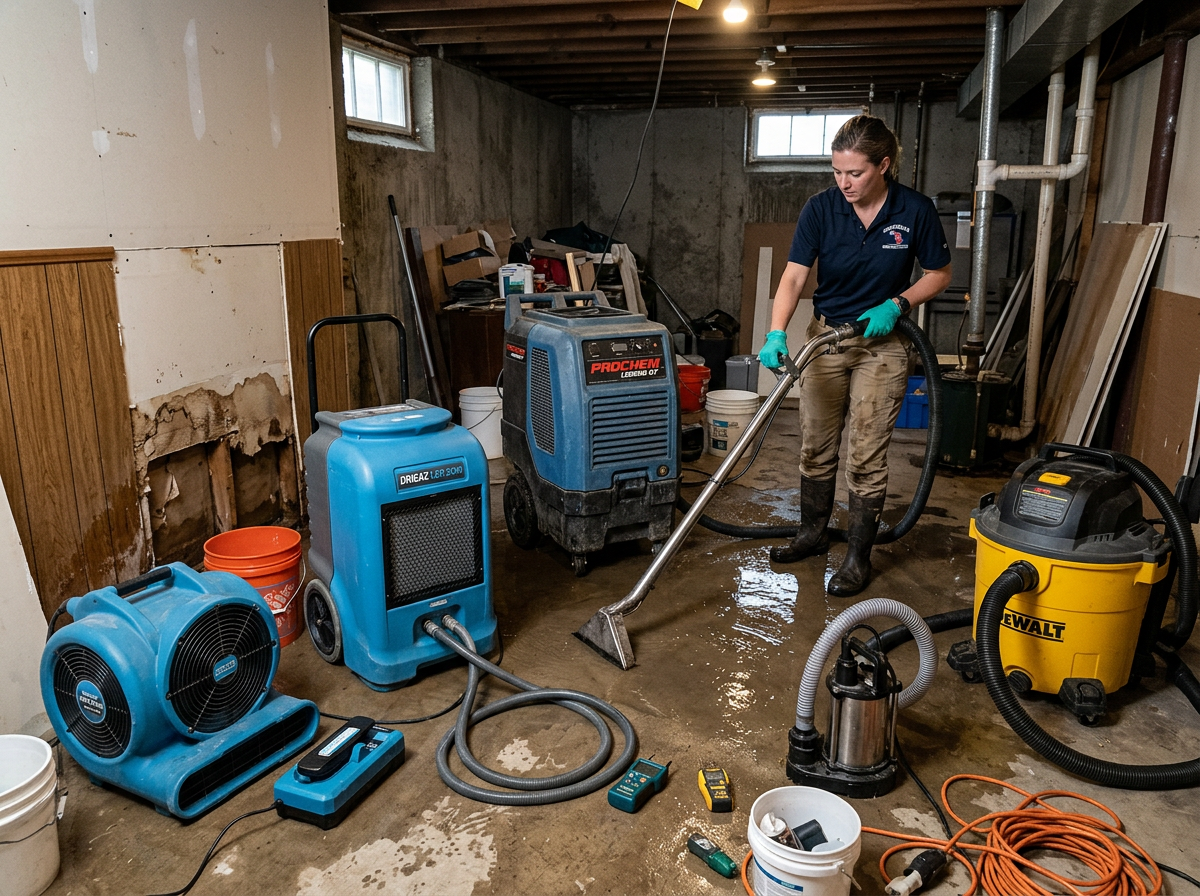
For flooded basement cleanup in Michigan, crews typically rely on submersible pumps rated for several thousand gallons per hour, industrial air movers, commercial dehumidifiers, and moisture meters to extract water and dry structures after events like sewer surcharges or January pipe bursts. These tools address the challenges of clay soils that hold hydrostatic pressure and finished basements where water spreads quickly into walls and flooring. Teams begin by removing standing water, then focus on drying to prevent mold in the humid local climate.
Submersible Pumps for Initial Water Removal
Submersible pumps form the first line of defense when basements fill from heavy rain or sump failure during power outages. In areas with combined sewers that surcharge, these pumps handle contaminated Category 3 water that rises through floor drains. Crews select models capable of moving thousands of gallons per hour while managing debris common in Michigan clay soils. After extraction, water levels drop enough for safe entry, though hidden moisture remains in porous materials. Proper pump use reduces the window before water classification changes, which occurs within 24 to 48 hours. Flooded basement cleanup often starts with this step before moving to drying equipment.
Air Movers and Industrial Fans for Air Circulation
Once visible water is gone, air movers create directed airflow across wet surfaces to speed evaporation. Michigan homes with finished basements require multiple units placed at floor level to reach under carpet pads and behind baseboards. These fans run continuously for several days, often 3 to 5, depending on the volume of water and outdoor humidity. In winter months after pipe bursts, crews adjust placement to avoid freezing lines at the 42-inch frost depth. The goal is consistent air movement without spreading contaminants from sewage backups. This equipment works alongside other tools to bring moisture content down to safe levels before any reconstruction begins.
Dehumidifiers and Moisture Control Equipment
Commercial dehumidifiers pull moisture from the air to reach target humidity levels around 40 to 50 percent in the affected space. In Michigan's variable climate, especially after lake-effect snow melts or spring thaw over frozen ground, these units run for 4 to 7 days on average. They prevent secondary damage in homes where water has wicked into drywall or insulation. Technicians monitor readings daily and adjust settings based on real-time conditions rather than fixed schedules. When combined with air movers, the process removes hidden dampness that would otherwise lead to mold in enclosed basement areas. Preventing mold growth after summer storms in Ypsilanti explains why this drying phase matters in local homes.
Moisture Meters and Detection Tools
Moisture meters and infrared cameras locate residual dampness behind finished surfaces without demolition. In clay-heavy regions where hydrostatic pressure pushes water through foundations, these tools confirm when materials have returned to normal levels. Technicians take readings at multiple depths and locations, including near backwater valve installations that homeowners add for future protection. Documentation from these devices guides decisions on what can be saved versus replaced. The process supports safe handling of sewage-contaminated water common in Michigan basements. Sewage backup cleanup teams use the same equipment to verify complete drying before final steps.
Supporting Extraction and Containment Tools
Additional items such as weighted water extractors and containment barriers help isolate wet zones and remove water from carpets or padding. These tools prove useful when water enters through cracks or during outages that disable sumps. Crews set up plastic sheeting to limit cross-contamination in multi-room basements. Combined with the core drying equipment, they create a controlled environment that matches Michigan's seasonal risks like winter freezes or heavy spring rains. Homeowners can review related drainage details in Understanding Local Drainage Issues in Ypsilanti During Heavy Rains for context on why these methods work locally.