
2026-09-13 ·
How to Dry Out a Flooded Basement After Michigan Snowmelt
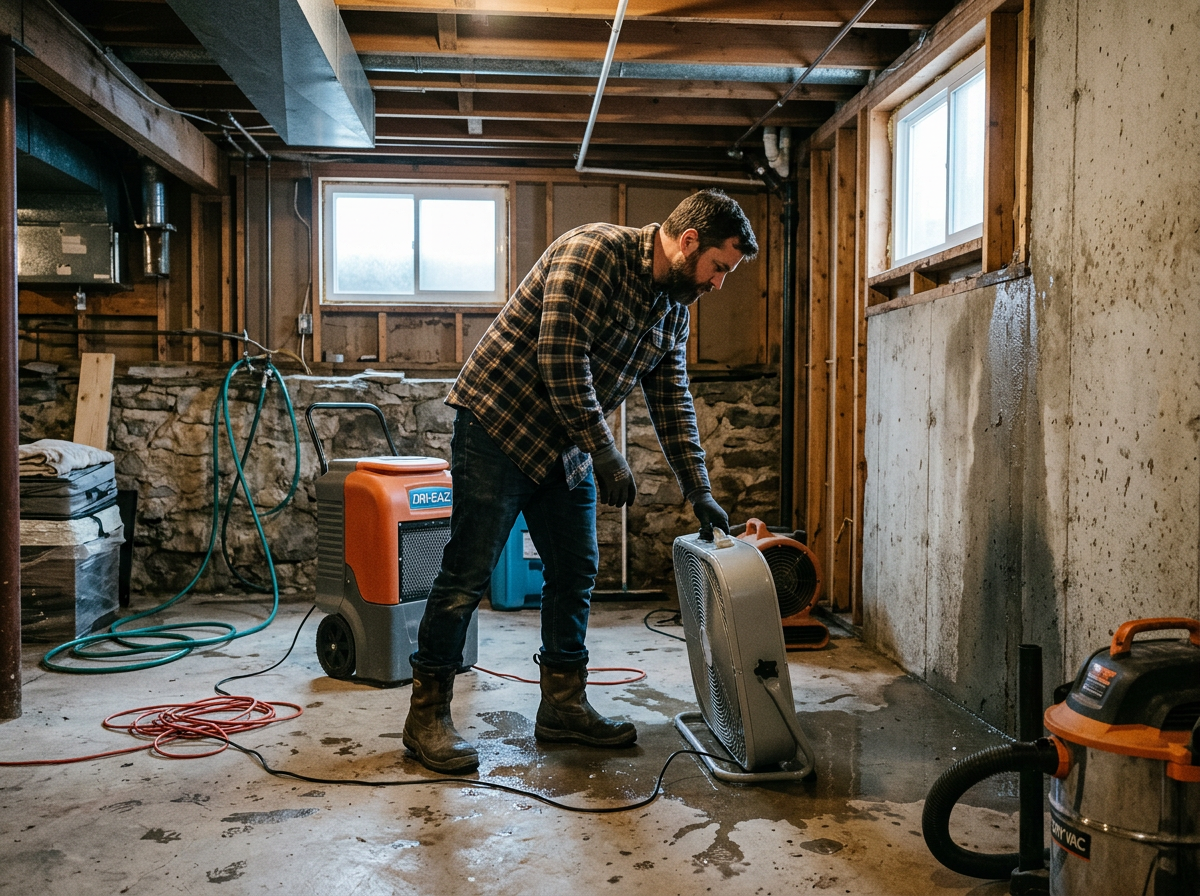
Drying a flooded basement after Michigan snowmelt starts with removing standing water within the first 24 to 48 hours, then running dehumidifiers and air movers until interior humidity stabilizes at 40 to 50 percent. This process commonly takes 5 to 10 days once extraction is complete, though finished basements with carpet or drywall require longer monitoring because trapped moisture behind walls can extend the timeline. Clay soils common across Washtenaw County hold water against foundations, and the 42-inch frost depth keeps the ground frozen while surface thaw sends runoff toward lower levels.
Assess Water Entry Points from Snowmelt
Spring thaw over frozen ground forces water to run across yards instead of soaking in, and clay soils direct it toward foundation cracks or around sump pits. Homeowners should check floor drains first for signs of surcharging, then inspect window wells and grading around the home for low spots that collect meltwater. In Ypsilanti, many basements sit near older combined sewer lines that can back up when heavy rain follows snowmelt. Document visible water lines on walls to track how high the water rose. Avoid entering standing water until power to affected circuits is shut off at the panel. Once the source is identified, focus shifts to extraction before moisture migrates into subfloor materials or insulation.
Remove Standing Water and Contaminated Materials
Standing water must be extracted promptly because Category 3 conditions can develop within 48 hours when sewage mixes with meltwater. Use a wet vac or submersible pump to lower levels below the floor surface, then remove saturated carpet padding and any particleboard that has wicked moisture. Finished basements common in Michigan make this step critical, since drywall installed below grade will hold water against the concrete. Place removed materials in sealed bags to limit odor spread. Homeowners who want to compare professional extraction methods can review the differences between DIY and professional flooded basement cleanup to understand equipment scale needed for larger volumes.
Run Drying Equipment to Target Humidity Levels
After extraction, position commercial dehumidifiers and air movers to pull moisture from concrete, framing, and any remaining finishes. Aim for consistent 40 to 50 percent relative humidity measured at multiple points in the basement. Because clay soils and hydrostatic pressure keep walls damp longer, drying often requires equipment to run continuously for several days beyond visible surface dryness. Check moisture meters on studs and subfloor daily. If water entered through floor drains, consider installing a backwater valve after the space is dry to reduce repeat risk. Readers dealing with insurance documentation after such events can find guidance in insurance paperwork for water damage claims in Washtenaw County.
Address Pipe Bursts and Sump Failures Common in Winter
January and February pipe bursts add sudden water volume when temperatures swing, while power outages during lake-effect snow events can disable sump pumps. Once the space is dry, inspect exposed supply lines for corrosion and test the sump float and check valve. Clearing ice dams from gutters and extending downspouts several feet from the foundation helps reduce future snowmelt pressure against the 42-inch frost line. For properties that experience repeated spring flooding, professional basement water removal teams can evaluate grading corrections or interior drainage options suited to local soil conditions.