
2026-09-13 ·
Protecting Foundation Walls from Groundwater in Ypsilanti
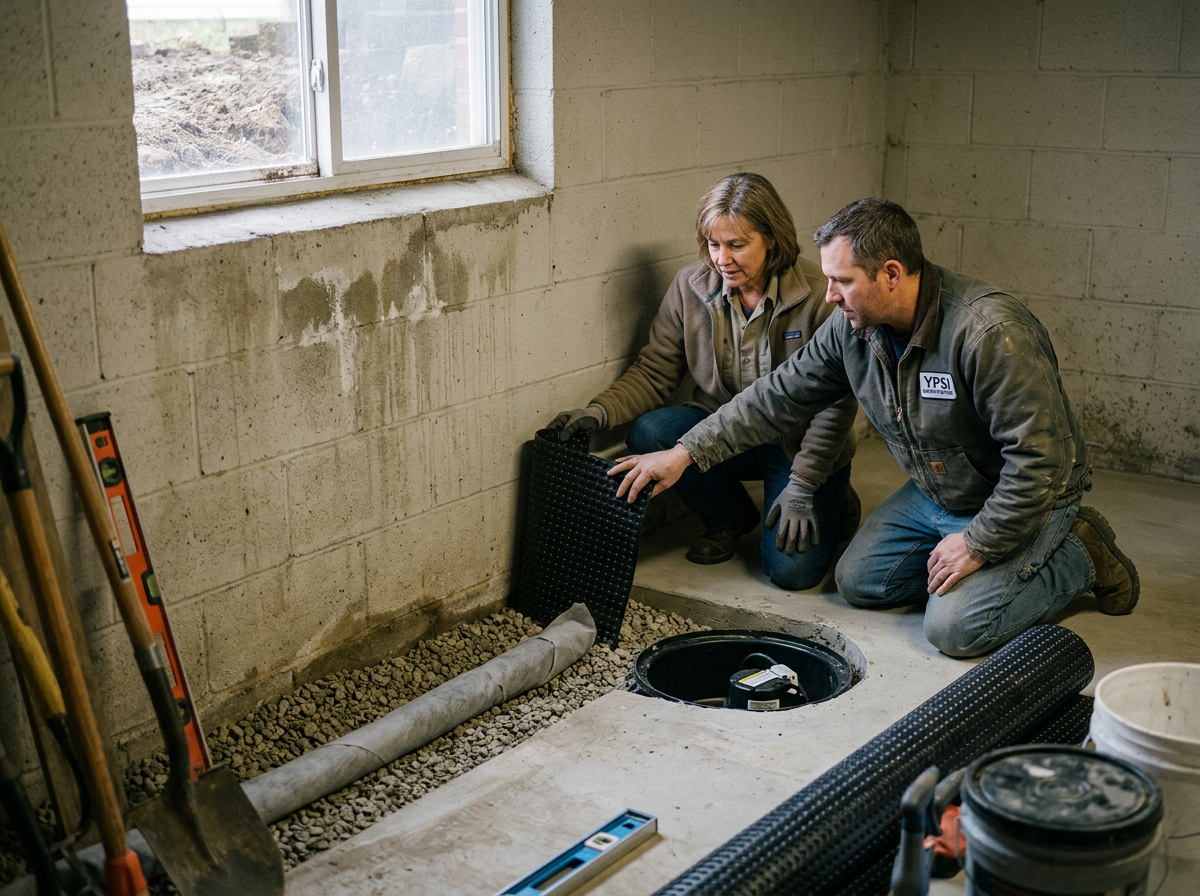
In Ypsilanti, protecting foundation walls from groundwater begins with improving surface grading to slope soil away from the house at least six inches over the first ten feet and installing French drains or sump systems that intercept water at the footing level before hydrostatic pressure builds against the walls.
Understanding Local Soil and Pressure Conditions
Ypsilanti sits on heavy clay soils that hold water and transmit hydrostatic pressure directly against below-grade walls. During spring thaw over frozen ground or after lake-effect storms, this pressure increases and can push moisture through even small pores in concrete. Homeowners notice efflorescence or damp spots first along the lower courses of block or poured walls. Monitoring soil moisture with a simple probe after heavy rain helps identify when exterior water is accumulating faster than the ground can absorb it. Once pressure exceeds the wall's ability to resist, water finds paths inward regardless of the wall's original waterproofing.
Addressing the 42-Inch Frost Line
Michigan's frost depth reaches 42 inches in Ypsilanti winters, so any drainage improvements must sit below this line to avoid heaving or blockage from frozen soil. Footing drains installed at or below this depth collect water before it freezes and expands against the foundation. Backfill around the drain should use clean gravel rather than native clay to maintain flow. Property owners who re-grade after construction often discover that shallow landscaping beds trap meltwater against the wall during January and February thaws, increasing pressure at the most vulnerable joint between wall and footing.
Practical Exterior and Interior Drainage Steps
Start by extending downspouts at least five feet from the foundation and ensuring gutters remain clear of leaves and debris. Next, evaluate whether a perimeter drain system is needed; many Ypsilanti basements benefit from an interior channel drain tied to a sump pump with battery backup for power outages. Seal visible cracks promptly, and consider the guidance in Addressing Cracks That Allow Water Into Ypsilanti Basements for matching repair methods to crack width and location. Interior systems do not replace exterior grading but provide a second line of defense when groundwater rises quickly.
When Water Still Reaches the Walls
Even well-protected foundations can experience seepage during extreme events. If water enters, remove it promptly with basement water removal equipment sized for the volume present. Drying times in Michigan basements typically range from three to seven days when dehumidifiers maintain indoor humidity below 55 percent. Readers can review typical timelines in How Long Does It Take to Dry a Flooded Basement in Michigan. Avoid sealing wet walls until moisture readings confirm the concrete has returned to acceptable levels; trapping water behind coatings leads to hidden mold growth.
Ongoing Maintenance for Long-Term Protection
Inspect grading and downspout extensions twice a year, especially after winter freeze-thaw cycles loosen soil. Clean sump pits and test backup batteries before spring rains arrive. In neighborhoods with combined sewers, backwater valves at floor drains reduce the chance of sewage entering during surcharge events, though these valves require periodic cleaning. Keep records of any moisture observations so patterns become clear over multiple seasons. When problems persist despite these measures, consult a local restoration team familiar with Ypsilanti's soil and frost conditions for targeted assessment.