
2026-09-13 ·
Differences Between DIY and Professional Flooded Basement Cleanup
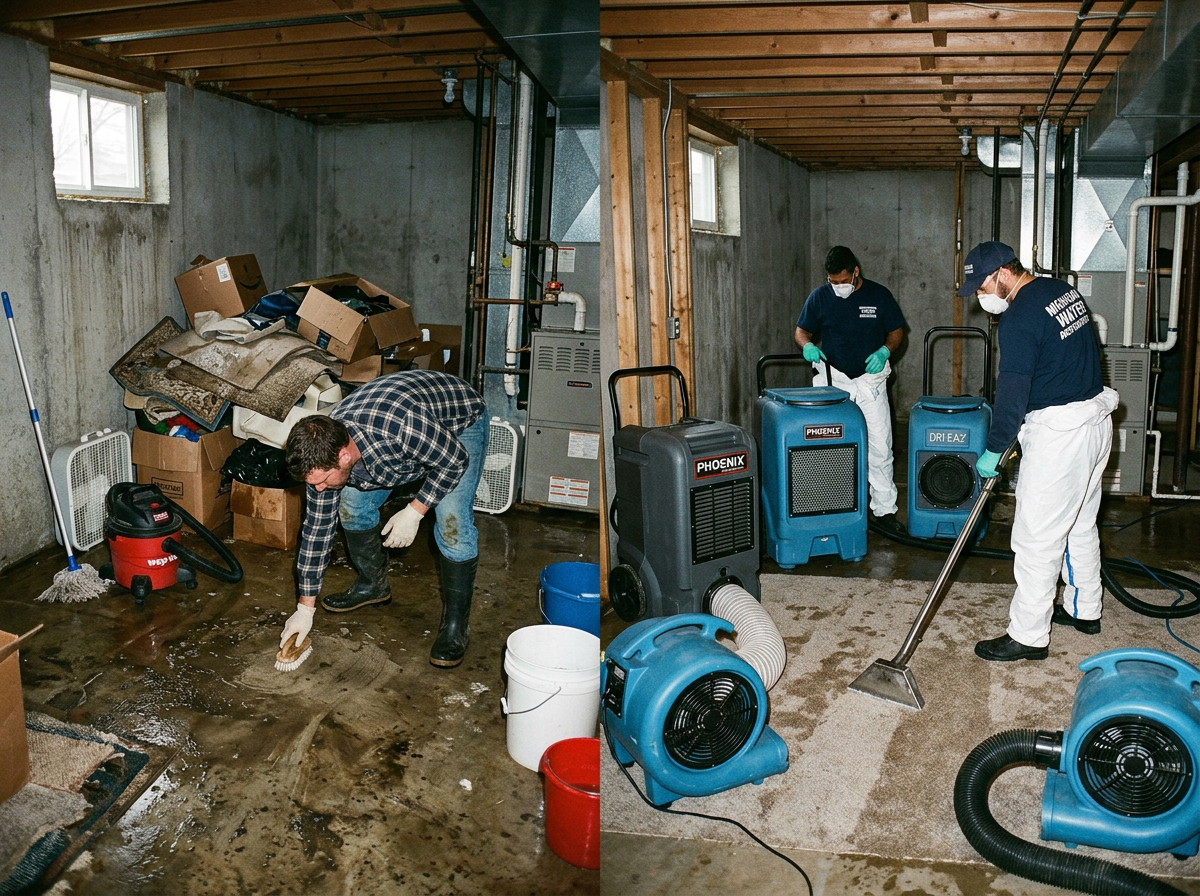
Professional flooded basement cleanup handles Category 3 water from combined sewer backups more safely and thoroughly than DIY methods because it uses commercial extraction tools, moisture meters, and controlled drying that reach behind finished basement walls and under slabs common across Ypsilanti. Homeowners attempting the work themselves often stop at surface water removal and miss hidden moisture that leads to mold in clay soils where hydrostatic pressure pushes water through foundations, especially after spring thaw over frozen ground or January-February pipe bursts.
Safety and Contamination Handling
Category 3 water from surcharging combined sewers carries sewage that requires full personal protective equipment and proper disposal procedures that most DIY setups lack. Professional teams isolate the area, use negative air machines, and follow protocols for removing contaminated porous materials in finished basements that sit at or below the 42 inch frost depth. Homeowners risk exposure when they attempt cleanup without these steps, particularly during summer storms when lake-effect moisture on the west side combines with local clay soils to increase inflow through floor drains. Backwater valves reduce future events but do not change the immediate need for trained handling once sewage has entered living spaces.
Equipment and Drying Requirements
Professional crews bring high-capacity air movers, dehumidifiers set to 40-50 percent relative humidity targets, and thermal imaging that DIY box fans and household dehumidifiers cannot match for reaching behind drywall or under slabs. In Michigan homes with finished basements, water trapped against the foundation after a sump failure during a power outage can take several days longer to dry without commercial equipment. The process often requires monitoring for 3-7 days depending on season and soil conditions, while DIY efforts frequently leave moisture that later causes hidden mold growth. How Long Does It Take to Dry a Flooded Basement in Michigan outlines typical timelines that factor in local frost depth and clay soils.
Time, Labor, and Hidden Costs
DIY flooded basement cleanup demands repeated lifting, hauling, and monitoring that professionals complete in coordinated shifts with proper containment. Removing water from a finished basement after a combined sewer event involves cutting and discarding saturated insulation and flooring that homeowners may not identify without moisture meters. The physical effort multiplies when water has wicked into subflooring or risen above baseboards during spring thaw events. Professional work focuses on verifiable drying rather than visual dryness, reducing the chance that residual moisture reappears weeks later.
When to Consider Professional Help
Situations involving sewage backup or water that has contacted finished surfaces benefit from teams equipped for sewage backup cleanup rather than homeowner attempts. Flooded basement cleanup services address the full scope from extraction through final drying in one visit sequence. Homeowners near the Huron River can review what causes basement flooding near the Huron River to understand how local conditions interact with combined sewer systems. Insurance coverage for these events depends on the specific policy, so contact your carrier directly to confirm details.